WITH · DID IT ACTUALLY WORK
Do nasal strips actually help your snoring?
They're cheap, they're everywhere, and your nose does feel more open with one on. But 'feels more open' and 'my snoring dropped' are two different things — and in the research they often come apart. SomniSense measures which one you actually got.
Record a few nights with the strip (or the nostril clip) on, and a few nights without, with the phone already by your bed. You'll see each breathing pause on a timeline, hear the actual sound, and watch whether the snoring really dropped — or just felt like it did. If the strip nights are genuinely quieter, you've found a cheap fix that works for you. If they're the same, you'll know in a few nights instead of buying box after box. Free, nothing to wear on your wrist.
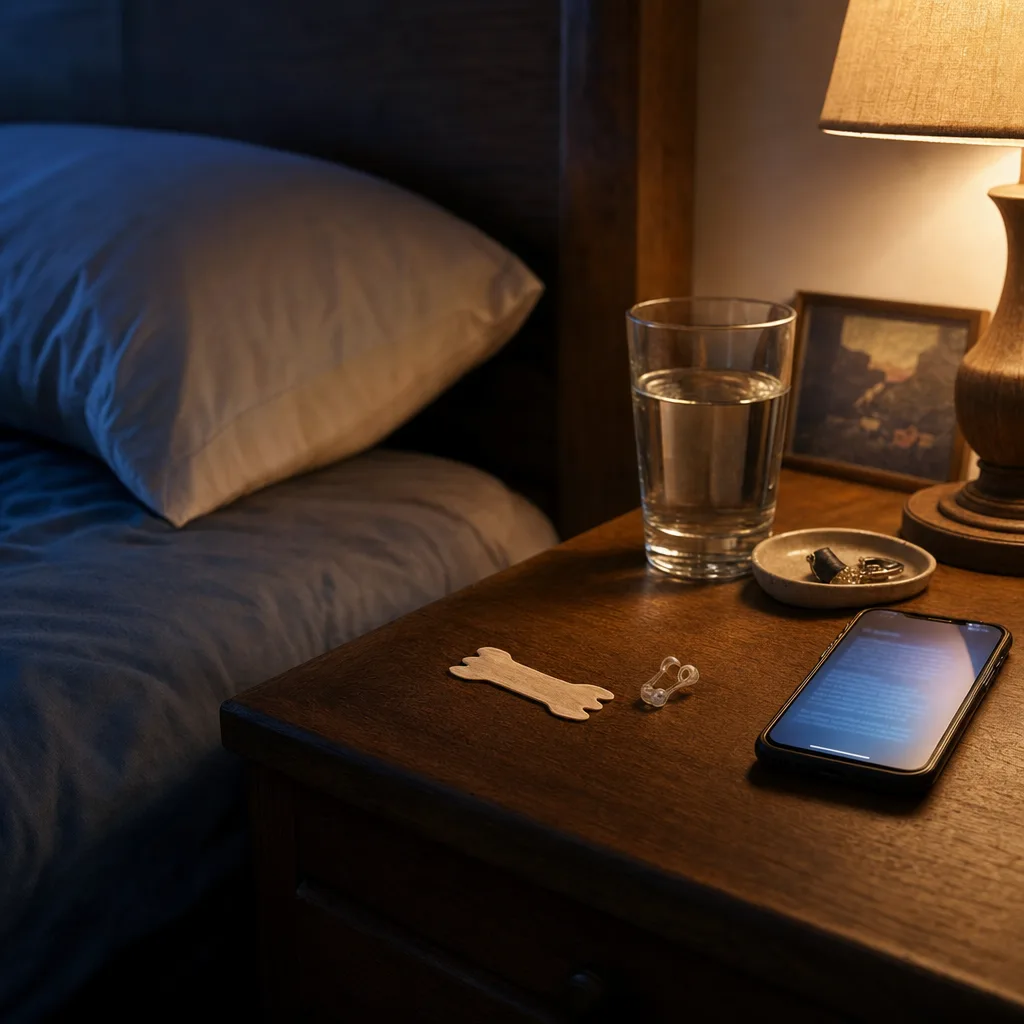
They work — if your problem is actually your nose
Here's the honest version. A nasal strip pulls your nostrils open a little. A nostril clip or cone does the same from the inside. If the reason you snore is that your nose is narrow, stuffy, or collapses a bit when you breathe in, opening it up can genuinely make you quieter. Some people get a real, hearable difference.
But most snoring doesn't start at the nose. It starts further back — the soft palate, the tongue settling backward as you fall asleep. When that's the source, you can hold your nostrils wide open all night and the sound keeps coming, because you fixed a part that wasn't the problem. Same strip, completely different result — and there's no way to feel which camp you're in. You can only see it.
How to actually test it
- Record a few nights without anything first. That's your baseline — what your snoring and breathing pauses normally look like.
- Then wear the strip (or clip) and record a few more. Same phone, same room, same corner of the bed.
- Compare the run, not one night. One quiet night is luck. A stretch of strip-nights that are genuinely quieter than your bare nights is a real signal.
- Decide on what you see. Quieter with it on → keep a box by the bed. No change → it's your nose that felt better, not your night, and you can stop buying them.
We don't sell the strip. We score it.
I'll be straight about what this is. SomniSense isn't a fix and it isn't selling you one — I don't make nasal strips and I don't earn a cent when you buy them. It's the neutral instrument that tells you whether the thing you tried is doing anything on your actual nights.
And a strip probably isn't the only thing you'll try. Maybe it's the strip, then a pillow, then sleeping on your side. The measurement is the one constant that lets you compare them honestly, instead of restarting the guessing every time.
Free to start · Pro adds the multi-night before/after and the doctor-ready report · 7-day free trial, cancel before day 8 to avoid the charge.
Read next
Common questions
- Do nasal strips work for snoring at all?
- For some people, a little. If your snoring really comes from a blocked or narrow nose, opening the nostrils can genuinely quiet it. But in controlled sleep studies, strips didn't move the harder numbers — the breathing pauses, the deeper snoring — and a lot of the 'I slept better' was people feeling better rather than their nights actually being quieter. Which camp you're in is exactly what you can't tell by feel. So measure it.
- What about the little clips you wear inside your nostrils?
- Same idea, slightly different hardware — internal dilators (the cone or clip that flares the nostrils open) tend to do a touch more than the stick-on strips, but in the studies the difference was small enough that people mostly stayed right where they started. Whichever kind you've got, the honest move is the same: record a few nights with it and a few without, and look at what actually changed.
- I feel like I breathe better with them on. Isn't that the point?
- Breathing easier through your nose is real and it's nice — that's the nasal-comfort part, and strips genuinely deliver it. It's just not the same as your snoring or your breathing pauses dropping. The two can come apart: the nose feels open, the night sounds the same. SomniSense shows you which one you actually got.
- Do you sell strips or recommend a brand?
- No. I don't make them and I don't earn anything when you buy them. SomniSense just records your nights and shows you what happened, with or without the strip on. What you keep is your call — and your doctor's.