WITH · COMPLEMENTARY DATA
Use SomniSense with your Whoop
Whoop is excellent at strain and recovery. SomniSense covers what Whoop's chest sensors can't pick up: the actual breathing pattern. Together you get a strain-plus-breath picture of why you're sleeping the way you are.
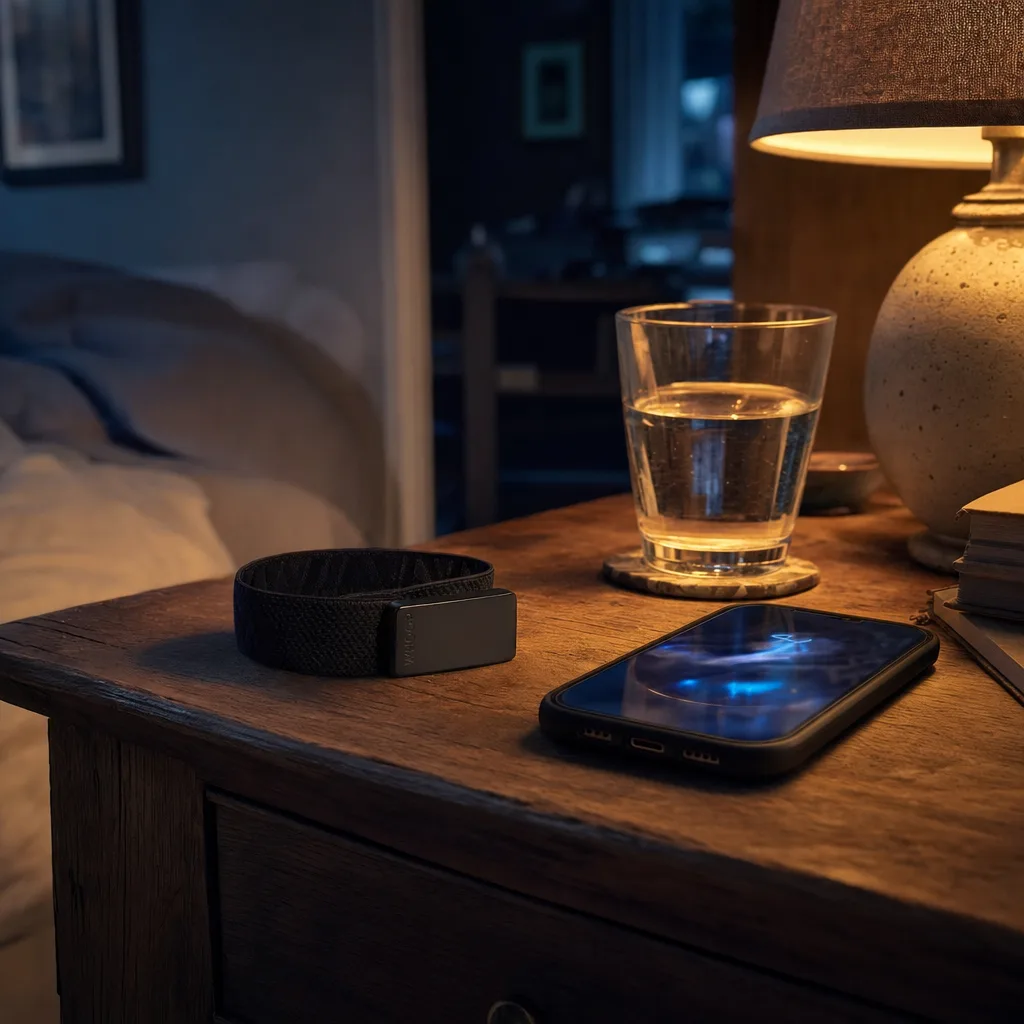
Your Whoop recovery stays low and overtraining doesn't fully explain it. The strap tracks strain, HRV, and sleep stages — but it isn't built to catch individual breathing pauses. Tonight, free, the phone on your nightstand catches what the strap can't: hear the actual pause or snore, see each event on a timeline, and decide for yourself whether it's worth a doctor visit. Nothing more to wear.
What Whoop does well
Whoop has a specific bet: measure strain and recovery in real time so you can adjust how hard you train. Most users I know who wear Whoop are either athletes or recovery-curious. The strain coach is genuinely good. The recovery scoring matters when you're trying to figure out whether to push or rest tomorrow.
If that's your setup — you're tracking training load and trying to optimize recovery — Whoop is doing real work.
What Whoop can't tell you about your sleep
Whoop infers sleep stages from heart rate variability, movement, and respiratory rate. That's good for "did I get enough deep sleep" questions. It's not designed to detect specific breathing pauses — that's not the same problem as estimating overall respiratory rate from skin contact.
If your Whoop sleep efficiency keeps coming in around 75% and you can't figure out why, the cause might be your training load (Whoop will show this). Or it might be 18 breathing-pause events per hour that are fragmenting your REM (Whoop won't catch this directly).
That's where SomniSense fits. The phone-microphone sees the breathing pattern Whoop's wrist sensor doesn't pick up. Combine the two: you know whether your fragmented sleep is from training stress or from breathing.
What you get when you run both
| Question | Whoop | SomniSense |
|---|---|---|
| Yesterday's training strain | Yes — primary metric | — |
| Recovery score | Yes — HRV + RHR + sleep | — |
| Sleep stages | Yes — inferred | — |
| Per-hour breathing events | Estimated respiratory rate only | BRI |
| Hear what woke you | — | Audio playback per event |
| Tag what you tried | Journal entries | Lifestyle Lab™ |
| Doctor-Ready PDF | Manual exports | Auto-emailed weekly + monthly |
The athlete pattern
A few of our most engaged Lab Members are actually endurance athletes who came in thinking their fatigue was overtraining. Their Whoop showed strain in the 14-15 range and recovery dropping. Classic overtraining picture.
Then they ran SomniSense for 30 days. BRI was averaging 16. Snore minutes climbing. Lifestyle Lab™ showed alcohol on race-week celebrations was moving BRI by 5+ events per hour.
The Whoop strain wasn't the only problem. The breathing pattern was a second compounding factor. Cutting alcohol on weeknights moved both — Whoop's recovery climbed and SomniSense's BRI dropped.
The lesson isn't "Whoop is wrong." Whoop showed exactly what it's built to show. The breathing layer just wasn't in its scope.
Free to start · Pro adds the multi-night before/after and the doctor-ready report · 7-day free trial, cancel before day 8 to avoid the charge.
Read next
Common questions
- Do these conflict?
- No. Whoop is on your wrist (or chest, or torso). SomniSense is on your nightstand. They measure different things.
- Why isn't my Whoop sleep score the same as my SomniSense BRI?
- Whoop's sleep score blends sleep stages, heart rate, recovery — it's a holistic score. SomniSense's BRI is just the per-hour breathing-event count. Different metrics.
- If Whoop says my recovery is 80% but SomniSense says BRI 22, who's right?
- Both are showing you something real. Recovery 80% with high BRI usually means your cardiovascular system bounced back fast, but your sleep architecture got chopped up by breathing events. Worth investigating — the Whoop number alone might let you ignore the breathing pattern.
- Can I use the Whoop API to feed strain data into SomniSense?
- Not yet — that integration would be valuable but it's not built. For now, you compare two views in two apps.