WITH · DID IT ACTUALLY WORK
Does sleeping on your side actually help your breathing?
It's the free advice everyone gives: roll onto your side. For a lot of people it helps — but two things are easy to miss. Does it actually move your numbers, and do you stay there all night? SomniSense measures both.
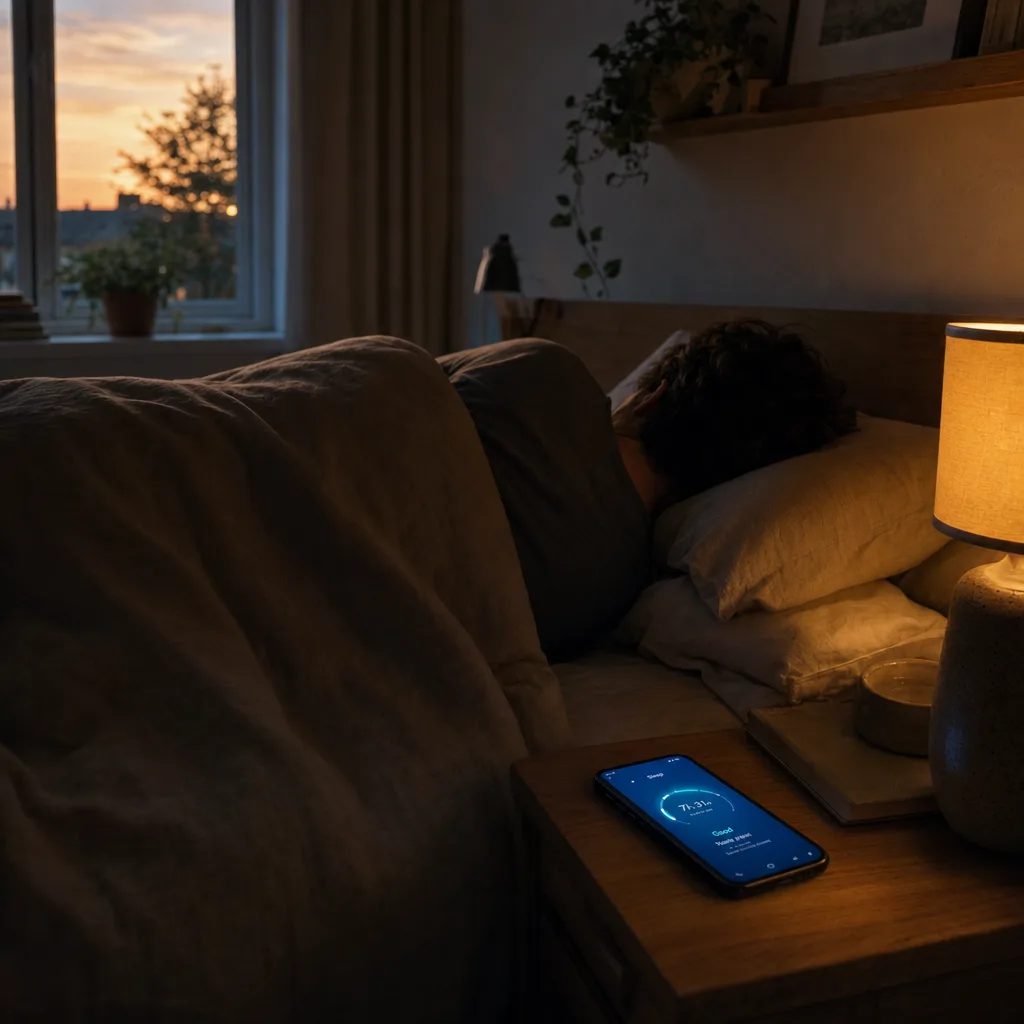
Record with the phone on your nightstand and tag the nights you tried to sleep on your side. You'll see and hear your snoring and breathing pauses each morning, and over a couple of weeks the Lifestyle Lab™ shows whether your side nights were genuinely quieter than your back nights. If they were, you've found a free fix that works for you. If they weren't, you'll know — and you can stop assuming it's handled. Free, nothing to wear.
Why side-sleeping is the first thing worth trying
When you're on your back, gravity pulls your tongue and soft palate toward the back of your throat. For a lot of people that's exactly where snoring and breathing pauses come from — which is why "just sleep on your side" is such common advice. It's free, there's nothing to buy, and for the right person it genuinely helps.
But "common advice" and "works for you" aren't the same thing. Some people snore just as much on their side. And plenty of people who mean to sleep on their side drift onto their back an hour in and never know it. Both of those are invisible without measuring.
The honest part: this isn't a position sensor
I'm not going to tell you SomniSense knows which way you're facing — it doesn't, and I'd rather be straight about that than oversell it. What it does is measure your breathing and snoring from the nightstand. The position part is on you: you tag the nights you tried to sleep on your side.
That's enough. Over a couple of weeks, the Lifestyle Lab™ Factor Impact view lines up your side-tagged nights against your untagged ones and shows you whether side-sleeping actually moved your breathing number — the same way it does for alcohol, late meals, or anything else you tag. You're not trusting a claim; you're reading your own before-and-after.
How to test it
- Record a few normal nights first. That's your baseline — however you usually sleep.
- Then make a point of side-sleeping, and tag those nights. Use whatever keeps you there.
- Give it a couple of weeks. One night proves nothing; a pattern across tagged nights does.
- Read the result. Side nights quieter → keep doing it, free. No difference → either it doesn't help you, or you're not actually staying on your side. Both are worth knowing.
Free to start · Pro adds the Lifestyle Lab™ before/after and the doctor-ready report · 7-day free trial, cancel before day 8 to avoid the charge.
Read next
Common questions
- Does SomniSense know which way I was sleeping?
- No, and I won't pretend it does — there's no position sensor in it. What you do is tag the nights you tried to sleep on your side. Over a couple of weeks, the Lifestyle Lab shows whether those side nights were genuinely quieter than your back nights.
- I try to sleep on my side but I roll onto my back.
- That's the whole problem with side-sleeping, and it's exactly why measuring matters. If your 'side nights' aren't any quieter than your back nights, it might be because you're not actually staying there. The data tells you whether the intention is translating into quieter nights or not.
- Is there any downside to just trying it?
- Not really. Side-sleeping is free and low-risk, which is why it's worth trying before you spend money on gadgets. The only real questions are whether it works for you and whether you stay there — and those are the two things this measures.
- Do you sell a positional device or recommend one?
- No. Try whatever keeps you on your side — a pillow behind your back, the old tennis-ball trick, whatever. SomniSense just tells you if it's actually moving your number.